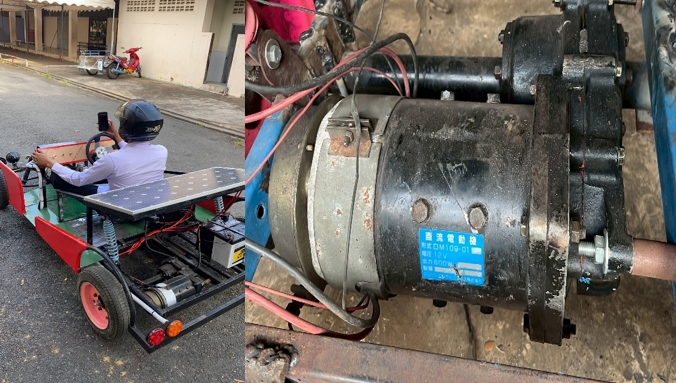
Development of an Electric Vehicle Prototype and a Hybrid Charging System
Keywords:
Electric Vehicle Drive System, Solar Energy Charging System, AC/DC Charging SystemAbstract
This research article aims to develop of an Electric Vehicle Prototype and a Hybrid Charging System, consisting of a solar energy charging system and a residential electricity charging system, and to evaluate the performance of the developed prototype electric vehicle. The propulsion system consists of a brushless DC motor rated at 24V with a power output of 600W. The motor is powered by two 12V, 40Ah batteries connected in series to provide a 24V power supply for the electric drive system. The DC charging system utilizes one solar panel with a power rating of 85W and a current output of 3.5A. Meanwhile, the AC charging system employs an AC-to-DC voltage conversion circuit through a step-down transformer rated at 18V. The experimental results of the dual-mode charging system showed that the voltage generated from the solar panel ranged from 18–19V, with the maximum voltage of 19V recorded between 12:00–13:00, corresponding to the highest light intensity of 9,616 Lux. This resulted in a continuous increase in the battery voltage level for the electric drive system. In addition, the test of the residential electricity charging system revealed that the voltage at the terminals of the two series-connected batteries gradually increased until reaching 24 V, which corresponded to the rated voltage of the propulsion system. The research results demonstrate that the developed prototype electric vehicle with a dual-mode charging system can reduce limitations associated with power sources for electric vehicle propulsion systems and provide greater flexibility in energy management by supporting both renewable solar energy and residential electrical power sources.
References
Limpitikranon, T. (2022). Electric vehicles: PM 2.5 environmental issues and opportunities in Thailand. Dhonburi Rajabhat University Journal of Management Science, 4(1), 50–63. [In Thai]
Maungnua, N., Paungmalee, N., & Sangthip, S. (2022). Electric vehicles: The vehicles of the future. Journal of Bansomdej Engineering and Industrial Technology, 3(1), 94–103. [In Thai]
Charoenthongthae, T., & Thanomtheeranant, K. (2023). Overview of the electric vehicle charging station business in Thailand. Journal for Strategy and Enterprise Competitiveness, 2(6), 80–95. [In Thai]
Pantangjaturasophon, A. (2025). Marketing mix factors influencing the decision to use electric vehicle charging stations in Nakhon Ratchasima Province. Kasetsart Applied Business Journal, 19(30), 43–58. [In Thai]
Tungpuri, S., Boonprasit, A., Anuan, W., Nadee, T., & Pholboon, C. (2024). An iOS-based map application for displaying electric vehicle battery charging stations in Bangkok Metropolitan Area. RMUTP Research Journal Humanities and Social Sciences, 9(2), 60–72. [In Thai]
Samsee, T., & Paisankittisakul, E. (2015). Real-time electric vehicle charging management by maintaining peak power demand in power systems to improve energy management system efficiency. Journal of Engineering and Innovation, 8(1), 77–90. [In Thai]
Promasa, N., Panapaiphat, C., Phonkaporn, S., Sirichunchuen, K., Ketkeaw, C., & Unahalekhaka, P. (2024). Suitable battery energy storage systems for residential applications with electric vehicle charging installations. RMUTSB Academic Journal, 12(1), 144–155. [In Thai]