Interlocking Block products from Stone Waste
Keywords:
Interlocking block, Stone waste, Soil cementAbstract
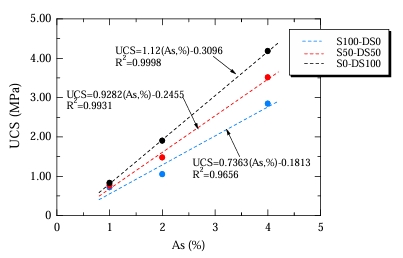
Research on the development of Interlocking block products from stone waste is aimed to design and development of Interlocking Block containing Stone Waste and comparing the results of the test with the standard of the community products. The mixture of 3 ratios of natural soil and stone waste was mixed with each of the 3 cement contents. After preparation, the samples were incubated at room temperature for 28 days under standard compaction and unconfined compression test. The results of the test found. The relationship between optimum moisture content and maximum dry density of composites tended to vary according to the change in stone waste content in the mixture. The relationship between compressive strength and cement content of composites is likely to be directly correlated. All of the ingredients are standardized in terms of water absorption. Finally, the results of the tests can be used to predict the optimum ratio of composite materials to meet the non-load-bearing capacity.
References
สำนักงานมาตรฐานผลิตภัณฑ์อุตสาหกรรม กระทรวงอุตสาหกรรม. “มาตรฐานผลิตภัณฑ์ชุมชนอิฐบล็อกประสาน (มผช 602/2547).” [สืบค้นเมื่อวันที่ 3 เมษายน 2559]. จาก http://app.tisi.go.th/otop/standard/standards.html.
Andrews, W.P. “Cement and soil-cement roads.” Contractors record Ltd., London, 1960.
เขม เกศทอง. “คู่มือการสร้างบ้านด้วยบล็อกประสาน.” สำนักพิมพ์สยาม, 2545.
ประณต กุลประสูติ, “เทคนิคงานปูน-คอนกรีต”, สำนักพิมพ์แห่งจุฬาลงกรณ์มหาวิทยาลัย, 2548.
สถาบันวิจัยวิทยาศาสตร์และเทคโนโลยีแห่งประเทศไทย. “เทคโนโลยีบล็อกประสาน วว.” เพื่อการสร้างอาคารราคาประหยัด. [สืบค้นเมื่อวันที่ 3 เมษายน 2559]. จาก goo.gl/cPt3n2.
วุฒินัย กกกำแหง และวิทยา วุฒิจำนง. “การประยุกต์ใช้ยิปซั่มในการผลิตบล็อกประสาน.” เอกสารการประชุมวิชาการวิศวกรรมโยธาแห่งชาติครั้งที่ 12, พิษณุโลก, 2-4 พฤษภาคม 2550.
วุฒินัย กกกำแหง และนรา รัตนวงศ์. “บล็อกประสานจากหน้าดินขาว.” เอกสารการประชุมวิชาการวิศวกรรมโยธาแห่งชาติครั้งที่ 13, พัทยา, 14-16 พฤษภาคม 2551.
นิพนธ์ ตันไพบูลย์กุล. “การใช้ฝุ่นจากโรงโม่หินแทนที่ซีเมนต์ในการทำอิฐบล็อกประสาน.” วารสารมหาวิทยาลัยนราธิวาสราชนครินทร์. ปีที่ 9, ฉบับที่ 1, มกราคม-เมษายน 2560, หน้า 126-135. [สืบค้นเมื่อวันที่ 19 มิถุนายน 2560]. จาก goo.gl/okjwHS.